




How to Compare Ocean Freight vs Air Cargo Costs
An accurate ocean freight vs air cargo cost comparison starts with your shipment’s packed dimensions, weight, and delivery deadline. Comparing a sea-freight rate per cubic metre with an air-freight rate per kilogram will not tell you which option offers better value.
Ocean freight generally provides lower transport costs for larger, less urgent shipments. Air cargo offers faster transport, which can justify its higher price when goods are urgently needed or delays would affect your business.
The right decision comes from comparing complete delivery costs and the financial impact of waiting.
This guide explains how freight pricing works, which additional charges to check, and when each mode makes sense for businesses importing from China into Africa—with practical examples for the China–Tanzania corridor.
Ocean Freight vs Air Cargo: The Main Differences
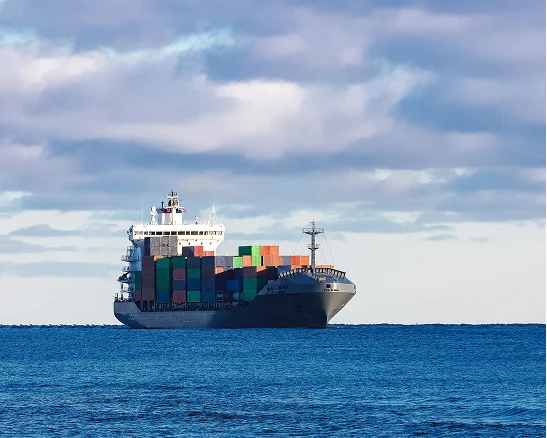
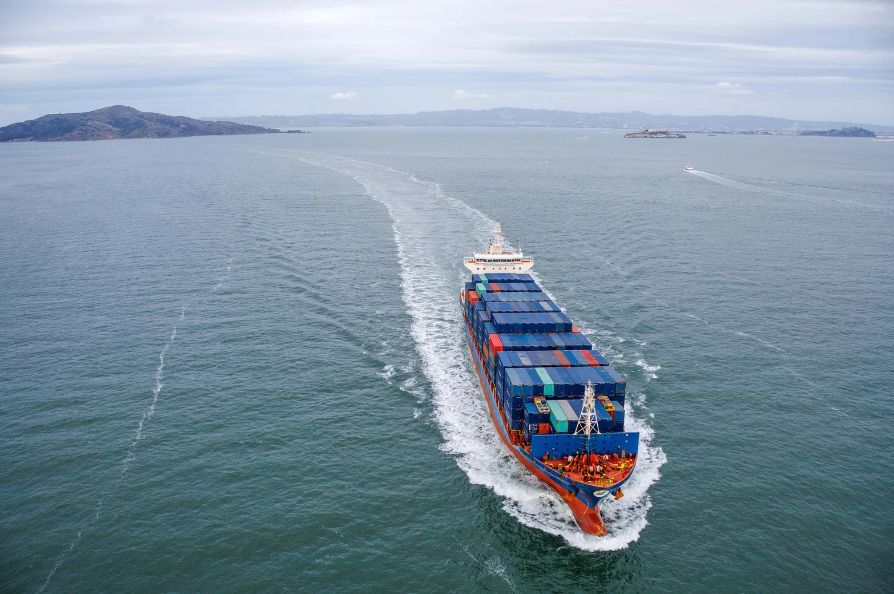
Ocean freight transports goods by sea, either in a shared container or a dedicated container. Air cargo moves goods on passenger or cargo aircraft.
| Factor | Ocean freight | Air cargo |
|---|---|---|
| Typical pricing basis | Weight or volume for LCL; per container for FCL | Chargeable weight in kilograms |
| Transport speed | Generally measured in weeks | Generally measured in days |
| Common use cases | Bulk orders, furniture, machinery and routine stock | Samples, urgent parts and time-sensitive goods |
| Shipment planning | Requires more advance planning | Can support faster replenishment |
| Cargo constraints | Container dimensions, weight limits and handling requirements | Aircraft capacity, dimensions and cargo acceptance |
| Main cost consideration | Handling, destination charges and inventory time | Chargeable weight, surcharges and airport handling |
These are planning distinctions, not guaranteed delivery times or universal rules. The actual route, cargo, and service determine your quotation.
1. Understand How Air Cargo Costs per Kilogram Work
Air cargo is commonly priced per kilogram of chargeable weight. This is usually the greater of:
Actual gross weight: the shipment’s physical weight, including packaging.
Volumetric weight: a weight calculated from the space the shipment occupies.
A common air-freight calculation uses:
Volumetric weight in kg = length × width × height in centimetres ÷ 6,000
Apply the calculation to every package and add the results. The divisor, rounding, and minimum charges must be confirmed with the provider. Express courier services may use different calculations.
Example: light but bulky goods
Suppose you have ten cartons, each measuring:
Length: 60 cm.
Width: 50 cm.
Height: 40 cm.
Gross weight: 12 kg.
The total actual weight is:
10 × 12 = 120 kg
Using a divisor of 6,000, each carton has a volumetric weight of:
60 × 50 × 40 ÷ 6,000 = 20 kg
Total volumetric weight is:
10 × 20 = 200 kg
The chargeable weight would therefore be 200 kg, before any applicable rounding or minimums.
A quotation based only on the 120 kg actual weight would underestimate the air-freight charge.
Why packaging matters
Large cartons with unnecessary empty space can increase air-cargo costs. Ask your supplier whether packaging can be made more compact while maintaining adequate protection.
Do not reduce protective packaging simply to lower the freight bill. Damaged goods can cost more than the transport saving.
2. Understand How Ocean Freight Costs per CBM Work
Ocean-freight pricing depends on whether you choose Less than Container Load (LCL) or Full Container Load (FCL).
LCL: weight or measurement
With LCL, your cargo shares container space with other shipments. Pricing commonly uses weight or measurement, written as W/M.
Under a common convention, the operator compares volume in cubic metres with gross weight in metric tonnes and uses the higher figure. Confirm the quotation’s calculation basis and minimum charges.
For rectangular packages:
CBM = length × width × height in metres
The ten cartons in the earlier example occupy:
10 × 0.60 × 0.50 × 0.40 = 1.20 CBM
Their actual weight is 0.12 tonnes. Under the common W/M convention, the chargeable quantity would be 1.20 units, before minimums or rounding.
Dense goods can produce the opposite result: a shipment measuring one CBM but weighing two tonnes may be charged on two W/M units.
FCL: per-container pricing
With FCL, the main ocean-freight charge is quoted per container rather than per CBM.
You still need to check collection, loading, terminal handling, delivery, and container-return costs. FCL may become more economical as your shipment grows, even before the container is completely full.
For multi-supplier orders, ECF can coordinate cargo collection and consolidation before onward shipping, helping you assess the combined shipment rather than each supplier’s order separately.
3. Compare the Same Shipment Using Both Pricing Methods
A price of “USD per kg” cannot be compared directly with a price of “USD per CBM.” First calculate the chargeable quantity for each mode, then add the relevant fees.
Illustrative ocean freight vs air cargo cost comparison
The following rates are hypothetical teaching examples. They are not current China–Africa market rates or ECF quotations.
Using the same ten-carton shipment:
Actual weight: 120 kg.
Packed volume: 1.20 CBM.
Air chargeable weight: 200 kg.
LCL chargeable quantity: 1.20 W/M units.
Assume both quotations cover equivalent collection and final-delivery services.
| Cost component | Ocean LCL example | Air cargo example |
|---|---|---|
| Base transport rate | USD 150 per W/M unit | USD 6 per chargeable kg |
| Base transport calculation | 1.20 × USD 150 | 200 × USD 6 |
| Base transport cost | USD 180 | USD 1,200 |
| Other quoted logistics charges | USD 420 | USD 250 |
| Total logistics cost | USD 600 | USD 1,450 |
In this example, ocean freight saves USD 850 in logistics costs.
However, this does not automatically make ocean freight the better business decision. The next question is whether the faster air service is worth the additional USD 850.
Convert totals into useful comparison figures
For this shipment, the total logistics cost per actual kilogram is:
Ocean: USD 600 ÷ 120 kg = USD 5.00 per actual kg.
Air: USD 1,450 ÷ 120 kg ≈ USD 12.08 per actual kg.
These are calculated comparison figures—not the providers’ quoted freight rates.
You can also divide the total by the number of saleable items to estimate the logistics cost per product.
Keep the distinction clear between:
The quoted rate.
The chargeable quantity.
The complete logistics total.
The cost allocated to each saleable unit.
4. Check Extra Fees Before Comparing Quotations
Charges that appear “hidden” are often service costs omitted from the headline rate. Request an itemised quotation before booking.
Ocean-freight charges to check
Depending on the service, these may include:
Supplier collection and inland transport in China.
Origin warehouse handling.
Consolidation and loading.
Export documentation.
Ocean-freight surcharges.
Destination terminal handling.
LCL deconsolidation and cargo release.
Customs-clearance service fees.
Storage after the included free period.
Local delivery.
Container-related charges for FCL.
LCL invoices commonly include origin and destination handling in addition to the ocean-freight charge. Special or non-stackable cargo can also affect pricing.
Air-cargo charges to check
Ask whether the quote includes:
Supplier collection.
Export documentation.
Origin airport handling.
Screening and security charges.
Fuel or other surcharges.
Destination airport handling.
Customs-clearance services.
Storage.
Final delivery.
Some charges may already be included in the quoted rate. Confirm inclusions so that you neither overlook a fee nor count it twice.
Separate freight from the full landed cost
Your landed cost includes more than logistics. It may also include:
The purchase price of the goods.
Insurance.
Duties and taxes.
Product-specific permits or certification.
Other applicable regulatory expenses.
Do not assume these amounts will be identical between modes. Different freight and insurance costs can affect the customs value used for assessment.
For Tanzania-bound shipments, confirm product requirements through your clearing agent and the Tanzania Trade Portal.
5. Compare Total Delivery Time, Not Just Transit Time
Air transport is generally faster than ocean transport, but the flight or vessel journey is only one part of delivery.
A complete schedule can include:
Supplier readiness and collection.
Export documentation and inspections.
Warehouse or terminal handling.
Booking availability.
International transport.
Destination handling.
Customs release.
Inland delivery.
Ocean-freight timing
Allow for sailing schedules, consolidation cut-offs for LCL, and transshipment where applicable.
At the destination, LCL cargo must also be unpacked and separated before collection or delivery.
Air-cargo timing
Allow for flight availability, cargo acceptance, screening, connections, and destination processing.
Air cargo can still be delayed if the documents are incomplete or the shipment needs additional approval.
China–Africa routes are not interchangeable
There is no single transit time or freight rate covering all China–Africa shipments.
The Chinese origin, African destination, service frequency, route, and inland delivery distance all matter. A quote to Dar es Salaam cannot be treated as a quote to another African port or an inland city.
Request a current estimate for your exact route, with the expected delivery milestone clearly defined.
6. Calculate Whether Faster Delivery Justifies Air Freight
The strongest ocean freight vs air cargo cost comparison includes the cost of waiting.
Air cargo can be financially worthwhile when faster delivery helps avoid:
Production downtime.
Stock shortages.
Missed sales opportunities.
Contractual delay costs.
Additional emergency purchases.
Spoilage or loss of product usefulness.
Illustrative urgency calculation
In the earlier example, air cargo costs USD 850 more than ocean freight.
Suppose the quoted air service would deliver 20 days earlier. That timing difference is an assumption for this example, not a route estimate.
The extra transport cost per day saved is:
USD 850 ÷ 20 days = USD 42.50 per day
If earlier delivery is reasonably expected to prevent more than USD 42.50 per day in lost contribution margin or operating costs, air cargo may offer better overall value.
Use realistic business figures. Sales revenue is not the same as profit, and faster delivery does not guarantee that every product will sell immediately.
Include inventory costs
Ocean freight may require earlier purchasing and longer periods with cash tied up in goods.
Air freight can shorten replenishment cycles, but frequent small air shipments may become expensive.
Compare the complete purchasing cycle rather than one transport invoice in isolation.
7. Match the Shipping Mode to the Cargo
| Cargo or business need | Option to investigate first | Main reason |
|---|---|---|
| Furniture and bulky household goods | Ocean freight | Volume can make air transport expensive |
| Routine wholesale stock | Ocean freight | Advance planning can reduce transport spending |
| Large machinery or equipment | Ocean freight or specialist transport | Dimensions, weight and handling determine suitability |
| Urgent replacement components | Air cargo | Earlier arrival may prevent costly downtime |
| Product samples | Air cargo or courier | Small quantities and speed may justify the price |
| High-value goods | Compare both, including insurance and security | Transport cost must be weighed against value and urgency |
| Perishable products | Specialist time-controlled service | Shelf life and handling requirements govern the decision |
| Batteries, chemicals or restricted cargo | Specialist assessment | Acceptance and documentation must be confirmed first |
Product value alone does not decide the mode. A high-value shipment may still suit sea transport if it is bulky and not urgent.
Likewise, low-value goods may need air transport if they are essential to keeping a business operating.
ECF offers both sea freight and air freight services, allowing China–Tanzania importers to assess the transport options alongside customs and delivery arrangements.
Could a Split Shipment Save More?
Sometimes the best solution is to use both modes.
For example, a retailer may send a small quantity of urgent stock by air while the main order travels by sea. A manufacturer may airfreight essential components and ship the remaining materials in a container.
This approach can help maintain operations while limiting the volume charged at air-freight rates.
However, two shipments can also create duplicated documentation, handling, minimum charges, and clearance work.
Ask for three comparisons:
The whole shipment by sea.
The whole shipment by air.
The urgent portion by air and the balance by sea.
Choose the split only if the combined cost and delivery benefits justify the additional coordination.
What Information Should You Send for an Accurate Quote?
Provide the same information when requesting both ocean and air quotations:
Product description and intended use.
Number of packages.
Dimensions of every package.
Gross weight.
Goods value.
Supplier collection address in China.
Final destination address.
Cargo-ready date.
Required delivery date.
Stackability and special handling requirements.
Any batteries, liquids, chemicals or other restricted contents.
Insurance requirements.
The service scope you want included.
Ask the provider to confirm the chargeable quantity, quotation validity, excluded costs, and estimated delivery schedule.
Accurate information reduces the risk of remeasurement, unexpected charges, and unsuitable bookings.
Frequently Asked Questions
Is ocean freight always cheaper than air cargo?
Ocean freight usually has a cost advantage for larger, less urgent shipments. Small shipments, minimum fees, destination costs, and the financial value of faster delivery can change the result.
How do I compare sea freight per CBM with air freight per kg?
Calculate each mode’s chargeable quantity, multiply it by the quoted rate, and add all relevant charges. Compare the complete delivery totals using the same collection and destination scope.
Why can air cargo cost more than the actual weight suggests?
Air freight commonly uses the greater of actual and volumetric weight. Lightweight goods in large packages may therefore be charged on the space they occupy.
Does one CBM equal 167 kg?
Under a common air-freight divisor of 6,000, one CBM corresponds to approximately 166.7 kg of volumetric weight. That is a pricing conversion, not the shipment’s physical weight. Confirm the provider’s divisor.
How much does shipping from China to Africa cost?
There is no single reliable rate for every route and shipment. Pricing depends on origin, destination, cargo, chargeable quantity, service level, booking date, and quotation inclusions.
Can ECF arrange both sea and air freight?
Yes. ECF lists sea freight, air freight, consolidation, customs-clearance support, and door-to-door logistics among its services connecting China and Tanzania.
Compare Your Shipping Options with ECF
A useful freight comparison answers two questions: What will the complete shipment cost, and what is faster delivery worth to your business?
Ocean freight can keep transport spending lower when you have enough time. Air cargo can offer better business value when urgency outweighs the additional freight cost.
Before booking, use the same cargo measurements and service scope to compare both options.
Request an ocean and air freight quotation from ECF with your packed dimensions, gross weight, supplier location, delivery address, and required arrival date.
A shipment-specific comparison helps you choose the mode that fits your cargo, deadline, and budget.