





LCL vs FCL Freight: Which Option Saves You More?
When comparing LCL vs FCL freight, the cheaper option depends on more than the size of your order. Cargo weight, handling charges, delivery requirements, and inventory costs can all change which service offers better value.
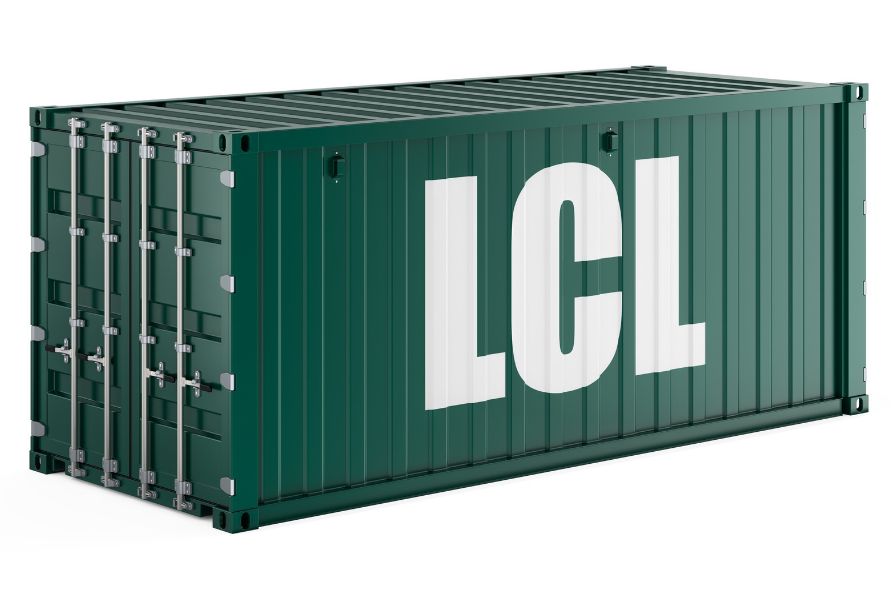
Less than Container Load (LCL) lets you share container space with other shipments. Full Container Load (FCL) gives you a dedicated container, even when your goods do not fill it completely.
LCL often suits smaller orders, while FCL becomes more competitive as shipment size increases. However, choosing correctly means comparing the complete cost of moving your goods—not just the advertised ocean-freight rate.
For businesses importing from China to Tanzania, this guide explains the differences, the costs to check, and how to decide which option fits your shipment and budget.
What Is the Difference Between LCL and FCL Freight?
The main difference is whether your shipment shares a container.
LCL: shared container space
With LCL, a consolidation operator groups your cargo with other compatible shipments at an origin warehouse. The shared container then travels by sea.
At the destination, the container is unpacked and the individual shipments are separated for release, collection, or onward delivery.
This arrangement allows you to ship smaller quantities without booking a whole container.
FCL: a dedicated container
With FCL, you book a container for your shipment. Depending on the service, it may be loaded at the supplier’s premises or a nominated warehouse.
FCL does not require the container to be completely full. A partially loaded container may still offer better value than LCL once all handling and destination charges are considered.
LCL vs FCL freight at a glance
| Factor | LCL freight | FCL freight |
|---|---|---|
| Container space | Shared with other shipments | Dedicated to your shipment |
| Main pricing basis | Chargeable weight or volume | Container size and type |
| Typical order size | Smaller commercial shipments | Larger orders or cargo needing separation |
| Handling | Includes consolidation and deconsolidation | Can reduce handling of individual packages |
| Delivery schedule | Includes shared-cargo processing stages | Avoids shared-cargo consolidation stages |
| Stock commitment | Supports smaller purchasing batches | Often suits larger inventory commitments |
| Main financial risk | Additional fees can reduce expected savings | Paying for unused capacity or excess stock |
ECF offers both LCL and FCL sea freight on the China–Tanzania corridor, alongside supplier coordination, customs clearance, and delivery services. Explore its freight and logistics solutions.
How Are LCL Freight Costs Calculated?
LCL charges commonly depend on weight or measurement, written as W/M.
Under a common sea-freight convention, the cargo’s volume in cubic metres is compared with its weight in metric tonnes. The higher figure determines the chargeable units. Minimum charges, rounding, and special-cargo rules may also apply.
Calculate your packed cargo volume
For rectangular packages:
Volume in CBM = length × width × height, measured in metres
For example, ten crates measuring 1.0 × 0.8 × 0.75 metres occupy:
10 × 1.0 × 0.8 × 0.75 = 6 CBM
Measure the final packed shipment, including pallets and protective packaging.
If those crates weigh two tonnes, a quotation using the common W/M convention would normally use six chargeable units. If they weigh eight tonnes, it would normally use eight.
Confirm the calculation with your forwarder before booking.
Include origin and destination charges
LCL quotations can include separate charges for warehouse handling, consolidation, documentation, deconsolidation, and destination services. Non-stackable or special cargo may attract additional costs.
A practical comparison is:
Total LCL logistics cost = chargeable freight + origin charges + destination charges + selected delivery services
Request an itemised quotation. A low rate per CBM can be misleading if substantial charges remain payable on arrival.
How Are FCL Freight Costs Calculated?
FCL ocean freight is generally quoted per container, with the price depending on the equipment, route, sailing availability, and service terms.
Common equipment includes 20-foot containers, 40-foot containers, and 40-foot high-cube containers. The right choice depends on cargo dimensions, weight, loading arrangements, and equipment availability.
Your total quotation may also include:
Container positioning and supplier collection.
Loading or warehouse services.
Export documentation.
Ocean freight and surcharges.
Destination terminal handling.
Customs-clearance services.
Inland transport.
Unloading and empty-container return arrangements.
Confirm any free-time allowance and charges associated with delayed collection or container return.
FCL can lower the logistics cost per unit as you use more of the container’s capacity. However, buying unnecessary stock to achieve that saving may increase your overall business costs.
Which Saves More? Compare Complete Quotations
The most useful LCL vs FCL freight comparison uses the same cargo and the same service scope.
For both quotations, specify:
Supplier collection location.
Final packed dimensions and gross weight.
Cargo description and handling requirements.
Destination address in Tanzania.
Cargo-ready date.
Insurance requirements.
Which customs, handling, and delivery services should be included.
Check whether taxes and regulatory costs are included or excluded from each quote. Choosing FCL instead of LCL does not itself remove applicable import obligations.
An illustrative cost comparison
The following figures are hypothetical. They are not current China–Tanzania rates or ECF quotations.
Assume:
LCL costs USD 500 in fixed logistics charges, plus USD 160 per chargeable unit.
Comparable FCL logistics costs total USD 2,900.
Both cover the same collection and delivery scope.
Goods value, duties, taxes, and insurance are excluded from both.
| Chargeable units | Illustrative LCL total | Illustrative FCL total | Lower logistics cost |
|---|---|---|---|
| 4 | USD 1,140 | USD 2,900 | LCL |
| 8 | USD 1,780 | USD 2,900 | LCL |
| 12 | USD 2,420 | USD 2,900 | LCL |
| 15 | USD 2,900 | USD 2,900 | Equal |
| 18 | USD 3,380 | USD 2,900 | FCL |
Here, the crossover is 15 chargeable units.
You can calculate the same simplified comparison using:
Break-even units = (FCL total − LCL fixed charges) ÷ LCL cost per unit
This formula works only when the quotations cover equivalent services and the LCL variable charges follow the assumed rate. Real quotations may use minimums, different charge bases, or stepped rates.
What Cargo Volume Makes FCL Worth Considering?
There is no universal volume at which every importer should switch to FCL.
As broad guidance, DHL identifies shipments below 20 CBM on suitable trade lanes as likely candidates for economical LCL shipping. That is a screening guideline, not a guaranteed China–Tanzania cost threshold.
The actual crossover depends on:
Current LCL and FCL quotations.
Cargo weight relative to volume.
Origin and destination handling.
Stackability and package dimensions.
Collection and delivery distances.
Special handling requirements.
Volume alone can give the wrong answer
A compact shipment of heavy metal components may attract weight-based LCL charges.
A lightweight shipment may occupy considerable space after protective packaging.
Non-stackable equipment may require more effective loading space than its measured dimensions suggest.
Ask your forwarder to assess both the chargeable quantity and whether the cargo physically fits the proposed container. Door dimensions, loading space, weight limits, and package shape matter alongside CBM.
As your order grows, request both LCL and FCL quotations before committing to either service.
LCL vs FCL Transit Times: Which Is Faster?
FCL can offer a shorter overall delivery process because it avoids shared-cargo consolidation and destination deconsolidation.
However, neither option is automatically faster on every route. Sailing frequency, transshipment, booking availability, and customs processing can outweigh the difference in handling.
Why LCL may need additional time
An LCL schedule can include:
Supplier collection.
Warehouse receipt and measurement.
Consolidation cut-off.
Container loading.
Ocean transport.
Destination unpacking.
Cargo release and local delivery.
Missing a consolidation cut-off may mean waiting for the next available departure.
Why FCL can still be delayed
FCL shipments also depend on cargo readiness, vessel schedules, correct documents, customs release, and transport arrangements.
A dedicated container does not guarantee immediate delivery after the vessel arrives.
Compare the complete schedule
Ask for an estimate from cargo readiness to final delivery, with the major stages identified.
A port-to-port transit estimate excludes collection, warehouse time, clearance, and inland delivery. If your goods are urgently needed, compare air freight or a split shipment rather than assuming either sea-freight option will meet the deadline.
Which Option Fits Your Importer Profile?
Your ordering pattern can matter as much as your shipment size.
| Importer profile | Option to investigate first | Reason |
|---|---|---|
| First-time importer testing products | LCL | Allows a smaller initial stock commitment |
| Retailer replenishing modest quantities | LCL | Can support smaller purchasing batches |
| Buyer ordering from several suppliers | Supplier consolidation, followed by LCL or FCL | Combines orders before selecting container arrangements |
| Wholesaler importing larger volumes | FCL | May provide a lower delivered logistics cost |
| Manufacturer importing dense components | Compare both | Weight-based LCL charges may change the economics |
| Importer of fragile or sensitive goods | Assess FCL alongside specialist LCL arrangements | Handling and cargo protection may justify additional cost |
| Business facing an urgent shortage | Compare air freight and sea options | Deadline costs may exceed freight savings |
New businesses and product testing
LCL can help you test a product without buying a container-sized order.
The relevant saving includes reduced stock exposure, not just the freight bill. Smaller orders may limit the money tied up in products that have not yet proved their demand.
Established wholesalers
FCL may suit businesses with predictable sales and larger replenishment requirements.
The benefits are strongest when purchasing volume reflects real demand, warehouse capacity, and available working capital.
Multi-supplier importers
Buying from several suppliers does not automatically mean you need LCL.
Orders can first be consolidated at a warehouse. The combined shipment may then travel as LCL or fill enough of a dedicated container to make FCL worthwhile.
ECF’s supplier collection and consolidation process supports bringing orders together before onward shipping.
Include Inventory Costs in Your Decision
The lowest freight cost is not always the lowest business cost.
FCL may reduce shipping cost per item but increase:
Cash committed to purchasing.
Warehouse-space requirements.
Time spent holding stock.
Exposure to slow-moving products.
Risk of damage, expiry, or changing demand.
LCL may keep orders smaller, but repeated shipments can increase handling charges and administrative effort.
Compare the cost over your purchasing cycle. For example, assess one larger FCL order against several smaller LCL orders covering the same demand period.
A useful decision framework is:
Business cost = logistics cost + inventory holding cost + expected delay or shortage cost
You may not know every figure precisely, but considering all three helps avoid a decision based only on the freight rate.
Cargo Protection and Customs Still Matter
LCL usually involves more handling of individual packages during consolidation and unpacking. Use packaging suitable for repeated movement, and declare fragile, heavy, non-stackable, or special cargo early.
FCL can reduce handling and improve control over container contents, but it still requires secure loading, suitable packaging, and appropriate insurance arrangements.
For Tanzania-bound shipments, confirm product-specific import procedures and documentation before departure. The Tanzania Trade Portal provides official information on import requirements and restrictions.
ECF also provides documentation processing, duty guidance, and customs compliance support through its clearing and forwarding services.
Common Mistakes When Comparing LCL and FCL
Comparing different service scopes
A warehouse-to-warehouse LCL quote and a supplier-to-door FCL quote do not show which service is cheaper. Request equivalent inclusions.
Using unpacked dimensions
Pallets, crates, and protective materials change the shipment’s actual volume.
Assuming a fixed CBM threshold
The crossover changes with rates, weight, handling, and destination costs.
Filling a container with unnecessary stock
Freight savings can disappear when excess inventory remains unsold.
Ignoring arrival charges
Check destination handling, storage, clearance services, delivery, and container-return responsibilities before booking.
Treating vessel arrival as the delivery date
Allow for destination processing, cargo release, and transport to your premises.
Frequently Asked Questions
Is LCL or FCL cheaper for small shipments?
LCL often costs less for smaller shipments because you share container space. Minimum fees and destination charges can change the result, so compare complete quotations.
Do I need to fill a container to use FCL?
No. You can book a dedicated container without filling it. FCL may still offer better value than LCL for the same cargo.
At what volume should I switch from LCL to FCL?
There is no fixed switching point. Request both quotations as your cargo grows, using the final packed volume, weight, and identical delivery scope.
Is FCL always faster than LCL?
No. FCL avoids shared-cargo processing stages, but overall timing still depends on the route, sailing availability, documents, customs release, and delivery arrangements.
Can goods from multiple suppliers travel in one FCL container?
Yes. Compatible supplier orders can be consolidated and loaded into a dedicated container. Coordinate collection dates, packing, and documentation before booking.
Which is better for importing from China to Tanzania?
LCL often suits smaller orders and product testing. FCL may suit larger volumes or cargo needing greater separation. The right option follows a comparison of cost, schedule, handling requirements, and inventory needs.
Find the Right Freight Option with ECF
The best LCL vs FCL freight decision starts with accurate cargo details and comparable quotations.
LCL can make smaller orders affordable, while FCL can deliver better value as shipment volume grows. Neither option saves money automatically: the result depends on the full logistics cost and how the order fits your business.
ECF offers LCL consolidation and FCL shipping for the China–Tanzania corridor, with supplier coordination, customs clearance, and final delivery services.
Request an LCL and FCL comparison from ECF with your cargo description, packed dimensions, gross weight, supplier location, cargo-ready date, and delivery address.
Comparing both options before booking helps you choose a shipment plan that fits your order size, schedule, and budget.